
“To Look At The Sea, Is To Become What One Is”.
Dates: 11th -16th August Opening Times 10.00am – 4.00pm
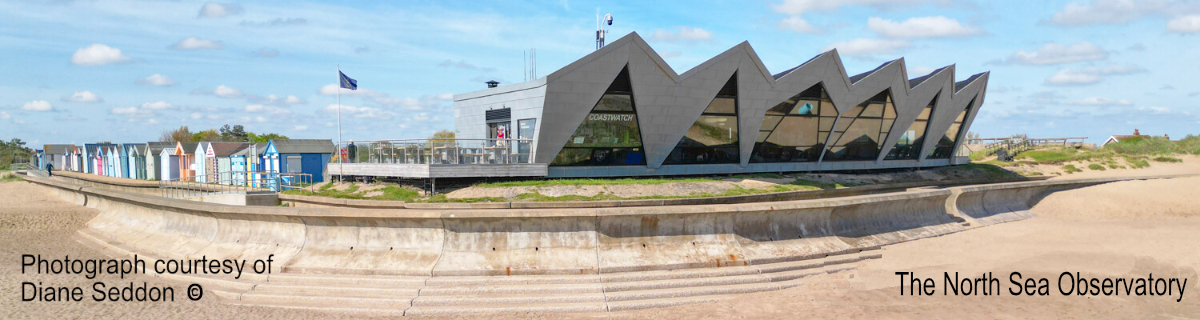
Venue Address: North Sea Observatory, Chapel Point, Chapel St Leonards , Skegness, United Kingdom, PE24 5XA
The following text offers further information about the exhibition interspersed with some of the works that will be on show in the exhibition.
The Exhibition title comes from a two-volume anthology of the work of poet, writer, and artist Etal Adnan. Born in Beirut in 1925 she said of her first influencing experiences of the sea and sun;
“I began writing poetry because nothing else in my adolescence interested me. It was in Beirut and for awhile the sea permeated absolutely everything. I was being in love with the sea, and the sun was everywhere, and I felt that the sun had more divine presence than all the nonsense taught in school about religion or morality.
I have always admired her paintings but fell in love with her writing ever since I came across her book “Shifting The Silence”.
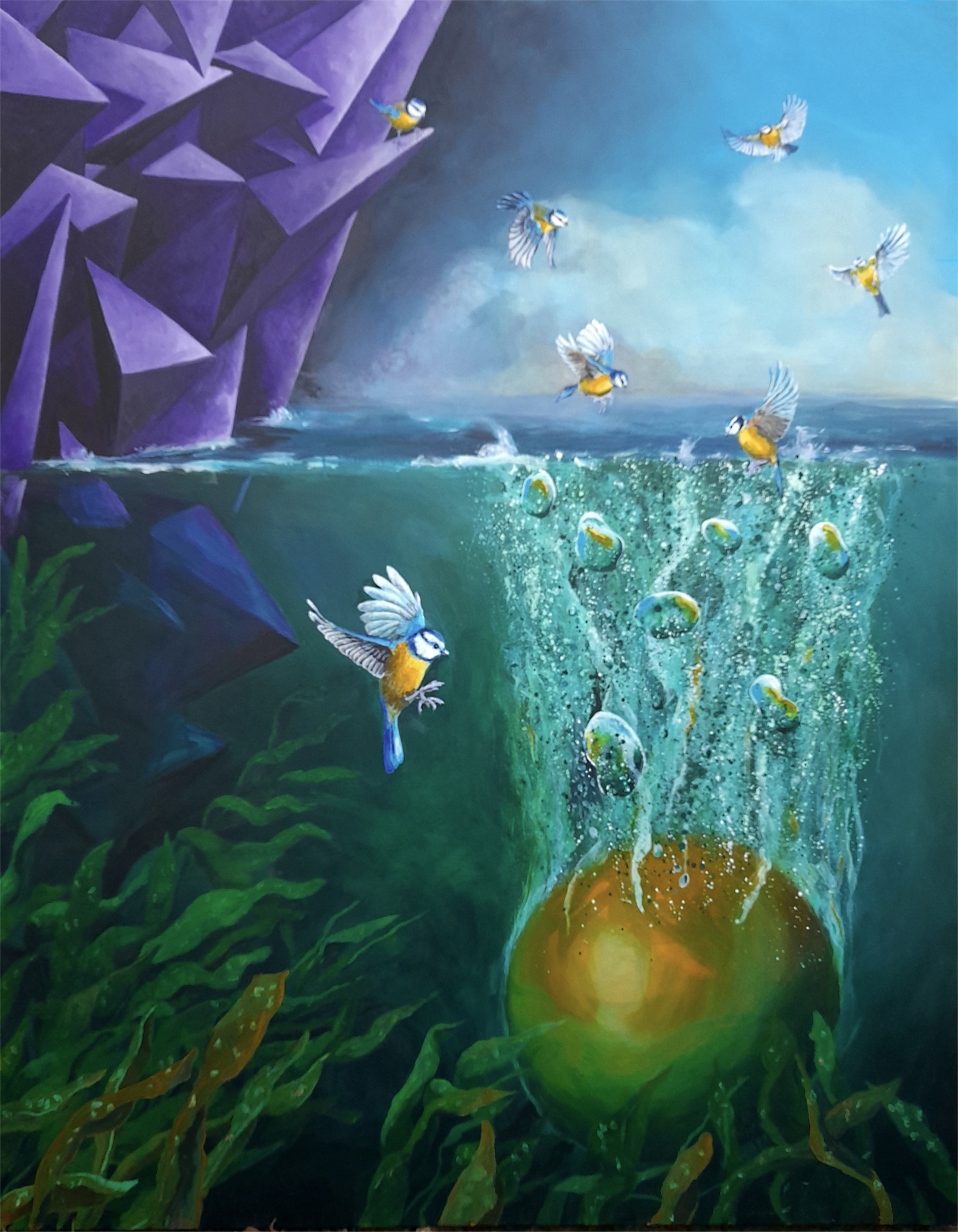
Shifting Silences, acrylic on canvas 122 x 153 x 3.5 cm. 2023.
Albert Camus in his essay on Summer in Algiers says of the sea;
“But Algiers and a few other privileged coastal towns open into the sky like a mouth or a wound. What one can fall in love with in Algiers is what everyone falls in love with: the sea, visible from every corner, a certain heaviness of the sunlight, the beauty of the people”.
What both these writers hint at is the powerful influence of the sea. Although the coastal edges of the UK, however stunning, are perhaps less glamourous than the edges of the Mediterranean, they have with the seasons a stunning beauty and a broad influence and impact on the psyche. And for me “to look at the sea” is to contemplate oneself and one’s circumstances. This is especially true on ones own when looking out to sea where there are none of the markers around us by which we judge ourselves.
Born in Galashiels in the Scottish Borders, my father’s work took us to the towns of Jedburgh, Newcastleton, and Hawick, it would be hard to find places further from the sea in that area. However, one of my fondest memories as a child was seaside picnics in the dunes at a place called Spittal near Berwick-on-Tweed in Northumberland. There were also holidays with Aunts on the Isle of Wight in the late 1950’s where I could watch iconic liners of the time Queen Mary and Queen Elizabeth heading out to sea from Southampton. That sense of what is beyond us and being on the edge of something began there.
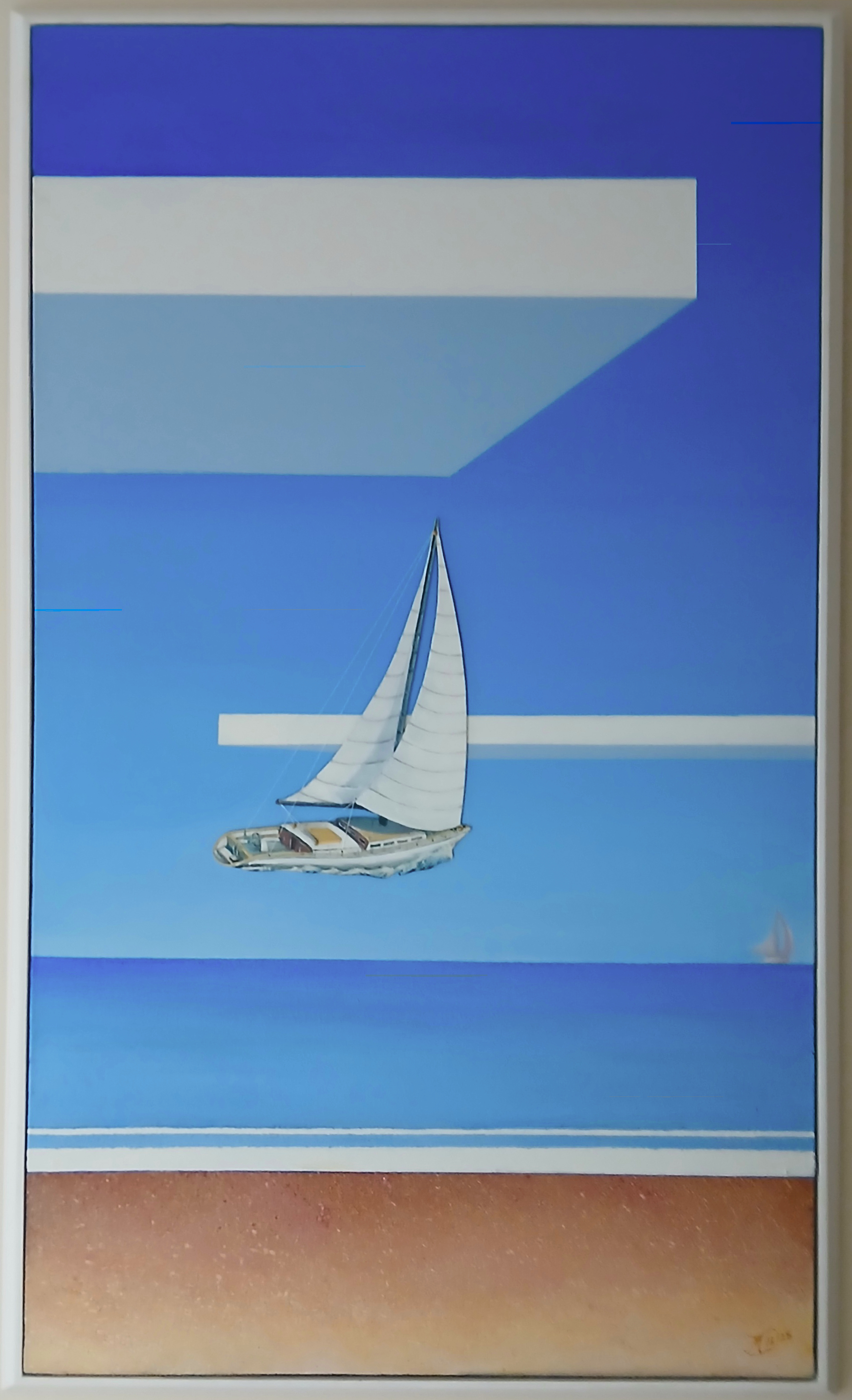
“Come Fly With Me” acrylic and oil on canvas, 79 x 131 x 5 cm, 2014 reworked 2026
Over the years the sea has always featured somewhere in my life, in the seventies, picnics with my wife at Littlehampton on the South Coast, where years later in the nineties I joined a group of keen scuba divers, diving wrecks in the English Channel and over the years have dived in numerous locations worldwide. In the late nineties, I decided to have a career change from publican to lobster fisherman and for two years fished for lobster out of Emsworth harbour, rather unsuccessfully. In the noughties I was a volunteer coastguard on the Lincolnshire Coast where I lived and continue to live till today.
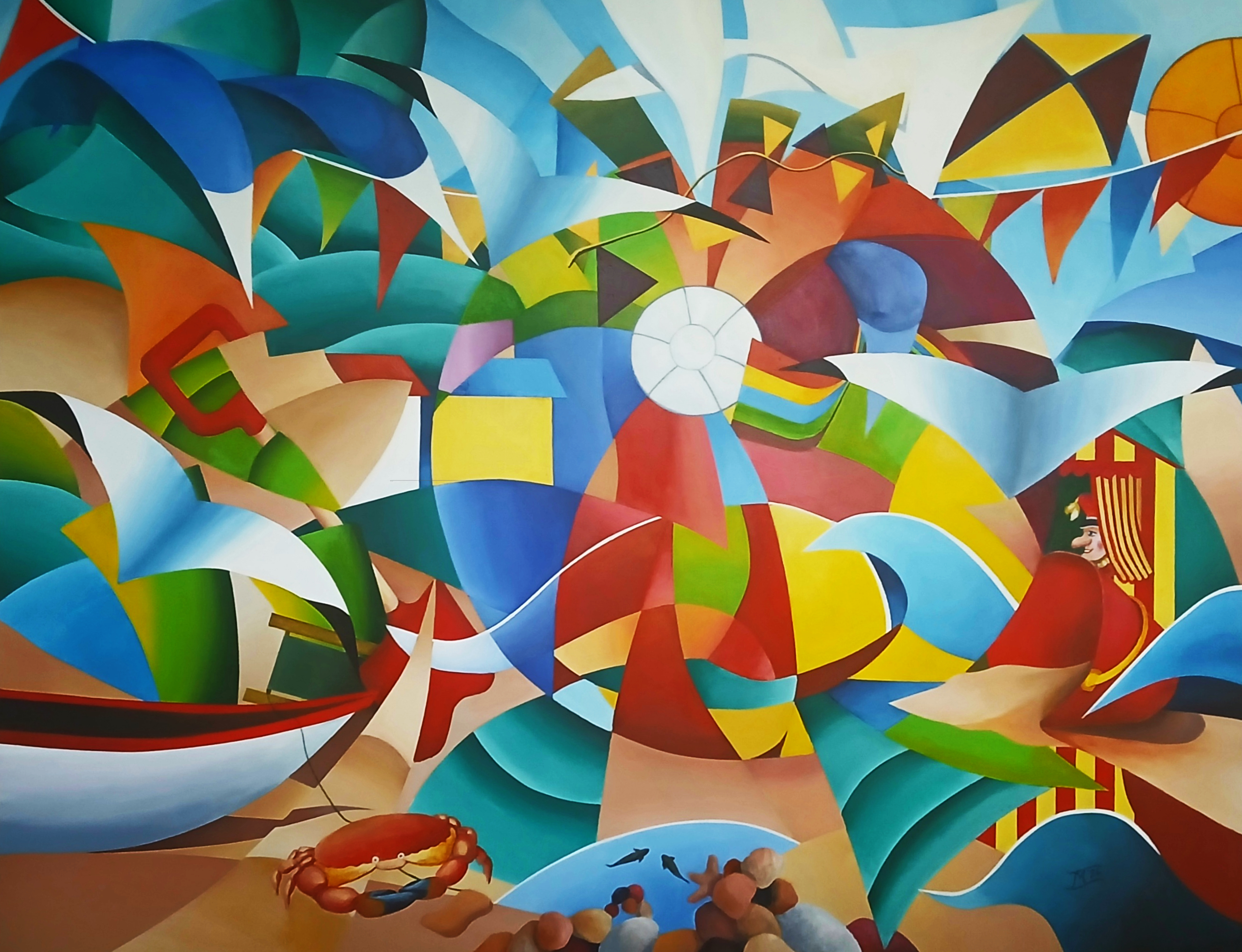
Enduring Memories, Childhood Picnics. 153 x 122 x 3.5 cm, 2026.
We begin life surrounded by definitions that are handed to us: family roles, cultural norms, inherited beliefs. These early frameworks are not the self, but they form the scaffolding around which the self takes shape. Finding the self often begins with noticing the tension between who we are told to be and who we feel ourselves becoming. The work in the exhibition explores cultural themes, the narratives that make us, memory, conflict all of the aspects of living that influence who we become.
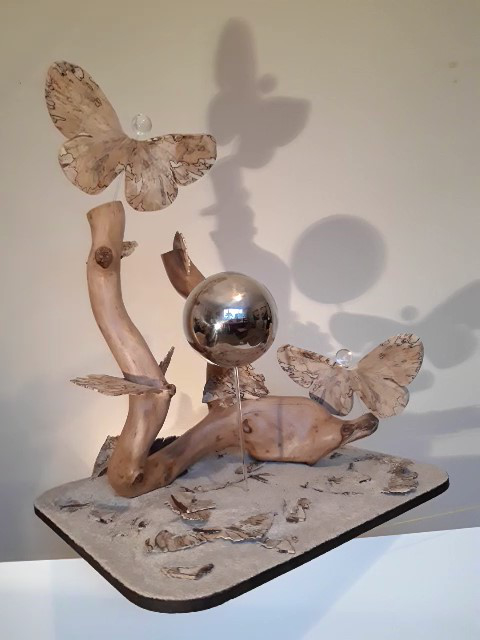
A Fragile Harmony, Assemblage of found wood, sand and bought components 81 x 66 x 86 cm, 2025.
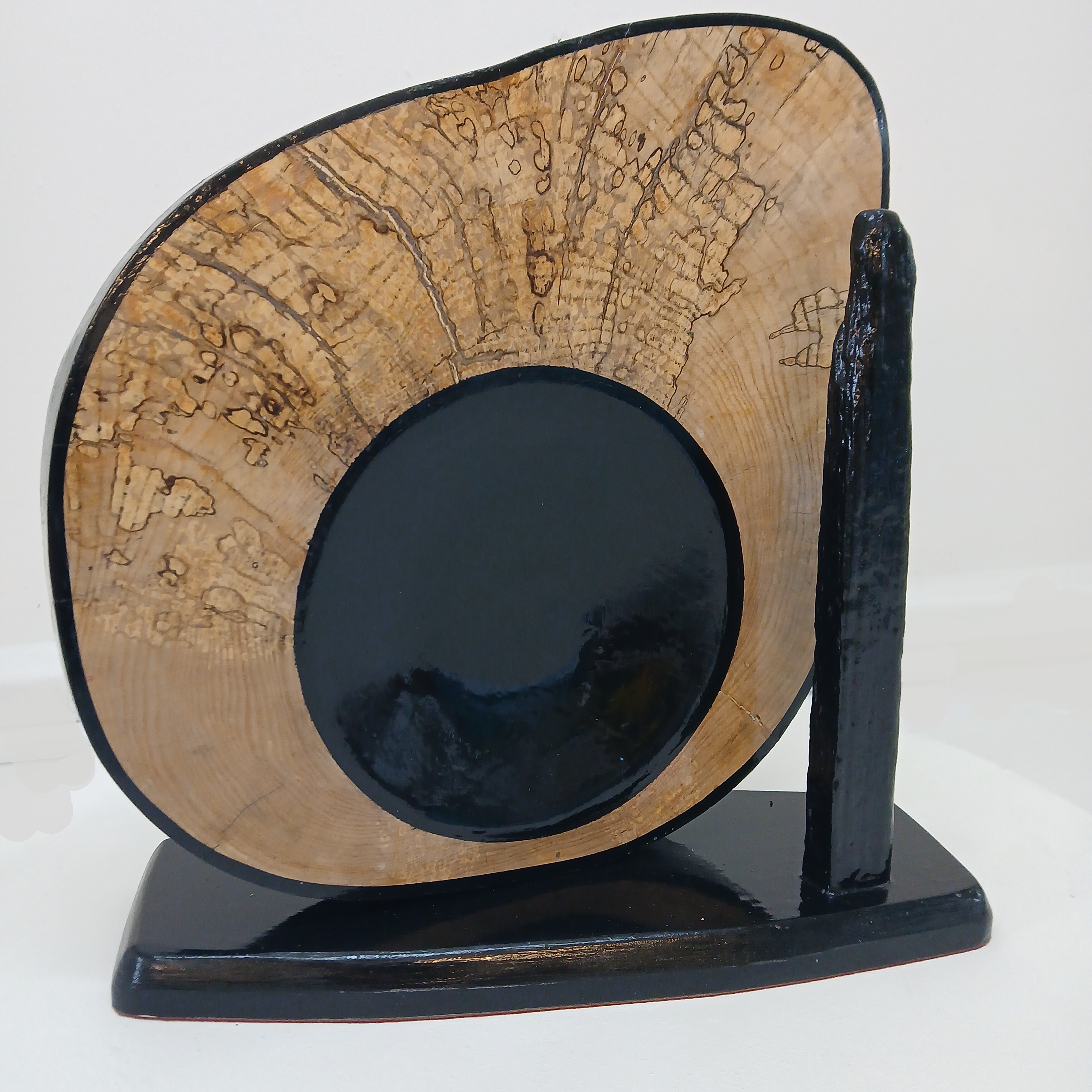
Memories Cast The Longest Shadows found and bought wood, 35.5 x 38 x 14 cm, 2024
We are always becoming – sometimes slowly without noticing, sometimes dramatically after traumatic events and in many ways in between. The truth is perhaps becoming is not something we achieve. It is how we live.
 Malcolm Tait, Artist and Maker